Water Flossers Explained: Benefits, Comparison with String Floss, and Usage Tips
Many patients at our Vasundhara clinic ask whether a water flosser can replace their daily string floss routine. It is a fair question, especially for people who find traditional floss awkward to use or who skip it altogether because of time or discomfort. This guide explains how water flossers work, how they compare to string floss, and how to pick and use one correctly.
What Is a Water Flosser?
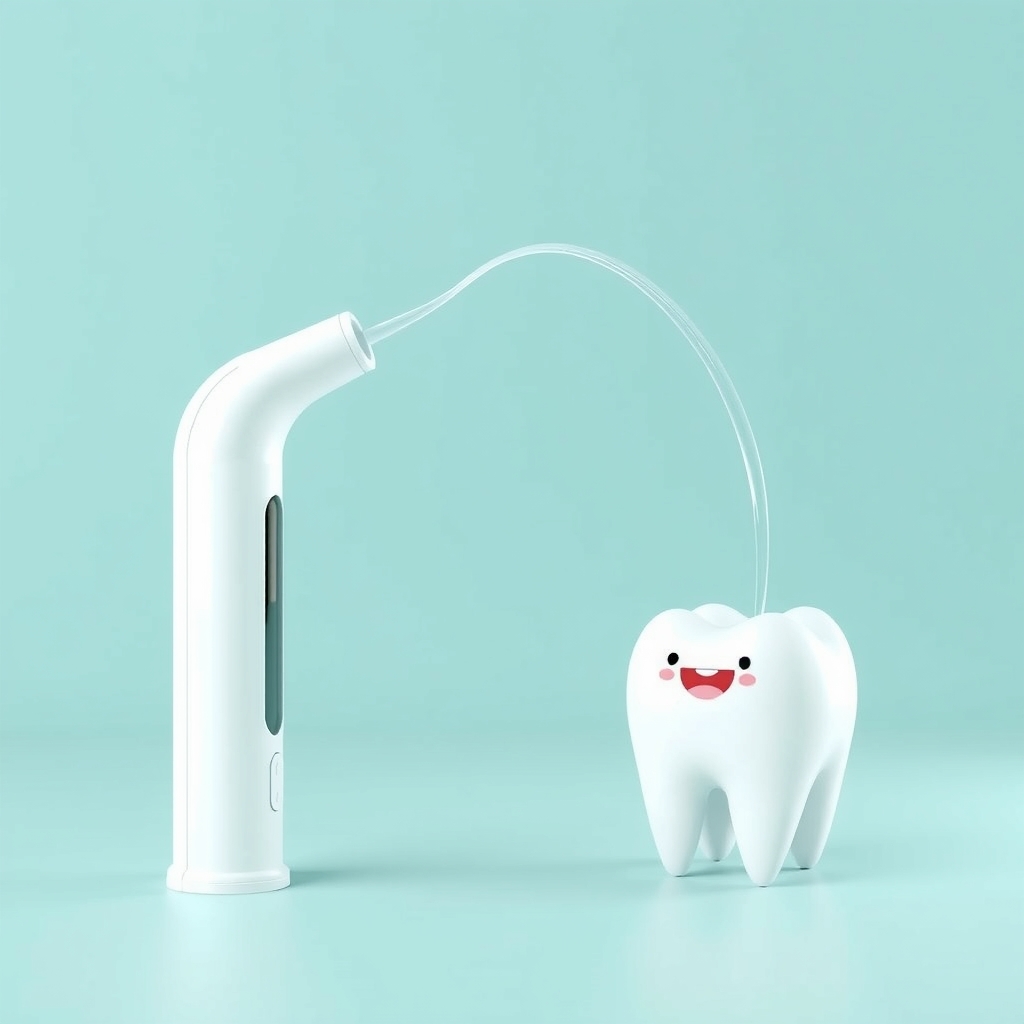
A water flosser, also called an oral irrigator, is a device that shoots a thin, pressurised stream of water between your teeth and along the gumline. The idea is to dislodge food particles and loosen plaque that a toothbrush cannot reach, particularly in tight spaces, around braces, bridges, and dental implants.
Most devices have a water reservoir, a motor that controls pressure, and a nozzle you direct along your gumline one tooth at a time. Many models offer adjustable pressure settings, which is helpful for people with sensitive gums.
How Does It Compare to String Floss?
Both tools aim to clean the areas between teeth that brushing misses, but they work differently.
String Floss
- Physically scrapes plaque and film off the tooth surface
- Low cost and easy to carry
- Can be difficult for people with limited hand dexterity, braces, or deep gum pockets
Water Flosser
- Flushes out debris and bacteria using water pressure
- Gentler on gums, often preferred by people with sensitive or bleeding gums
- Easier to use around braces, bridges, and implants
- Higher upfront cost and requires counter space and cleaning
| Factor | String Floss | Water Flosser |
|---|---|---|
| Plaque removal | Strong mechanical action | Good flushing, less scraping |
| Ease for braces/implants | Challenging | Easier access |
| Gum sensitivity | Can irritate if done roughly | Generally gentler |
| Portability | Very portable | Bulkier, needs power or batteries |
| Cost | Low | Moderate to higher upfront |
Who Benefits Most from a Water Flosser?
- People with braces, retainers, or permanent bridges
- Patients with dental implants who need gentle, effective cleaning
- Those with gum disease or sensitive, bleeding gums
- Anyone who finds string floss physically difficult to manage
- People who simply skip flossing because string floss feels tedious
If you have healthy gums and already floss consistently and correctly, string floss alone may be enough. A water flosser is most useful as a complement, not necessarily a full substitute.
Tips for Choosing a Water Flosser
- Look for adjustable pressure settings. Start low, especially if your gums are sensitive or inflamed.
- Check the reservoir size. Larger tanks mean fewer refills during use.
- Consider countertop versus cordless models. Cordless ones are convenient for travel but may have smaller tanks and shorter battery life.
- Pick the right tip. Standard tips suit most people, but orthodontic tips work better for braces, and periodontal tips are designed for deeper gum pockets.
- Budget realistically. In Vasundhara, Ghaziabad, basic water flossers typically range from around INR 1,500 to 3,000, while advanced or cordless models can go higher, typically up to INR 6,000 or more depending on features. These are general market ranges and not a quote from our clinic.
How to Use a Water Flosser Effectively
- Fill the reservoir with lukewarm water, not hot
- Lean over the sink and start on a low pressure setting
- Close your lips slightly to prevent splashing, but let water flow out into the sink
- Aim the tip at a 90-degree angle to your gumline
- Glide along each tooth, pausing briefly between teeth and along the gumline
- Work systematically around your mouth, upper and lower, outer and inner surfaces
- Clean the device tip and reservoir regularly to prevent bacterial buildup
It generally takes most people about one to two minutes to cover the whole mouth once they get used to the motion.
A Simple Takeaway
Water flossers are a genuinely useful tool, particularly for people with braces, implants, or gum sensitivity, and for anyone who struggles with traditional floss. For many patients, combining both methods gives the best results. If you are unsure which approach suits your gum health, our dentists at RAMS Dental Clinic in Vasundhara, Ghaziabad can take a look and guide you based on your specific needs.
Have questions about your teeth?
RAMS Dental Clinic · Avaj Tower, 438, Sector 12, Vasundhara, Ghaziabad
Frequently asked questions
Can a water flosser fully replace string floss?
For most people, a water flosser is a helpful addition rather than a complete replacement. It is excellent at flushing out debris and reducing gum bleeding, but string floss still scrapes plaque off the tooth surface in a way water alone cannot always match. Many dentists suggest using both, or at least checking with your dentist based on your specific gum health.
Is a water flosser safe for people with braces or implants?
Yes, water flossers are often recommended for patients with braces, bridges, or implants because the water stream can reach under wires and around restorations that string floss struggles to access. Use a gentle pressure setting at first.
How often should I use a water flosser?
Once daily, ideally after brushing, is generally sufficient for most people. Your dentist may suggest twice daily if you have gum disease or are recovering from certain treatments.
Do water flossers hurt or cause bleeding gums?
Mild bleeding in the first week is common if your gums are already inflamed, similar to starting string floss. This usually settles down. Persistent bleeding after two weeks should be checked by a dentist.
Treatment costs mentioned on this page are indicative ranges for the Vasundhara, Ghaziabad region. Your exact cost depends on your case and will be confirmed after a clinical examination at the clinic.